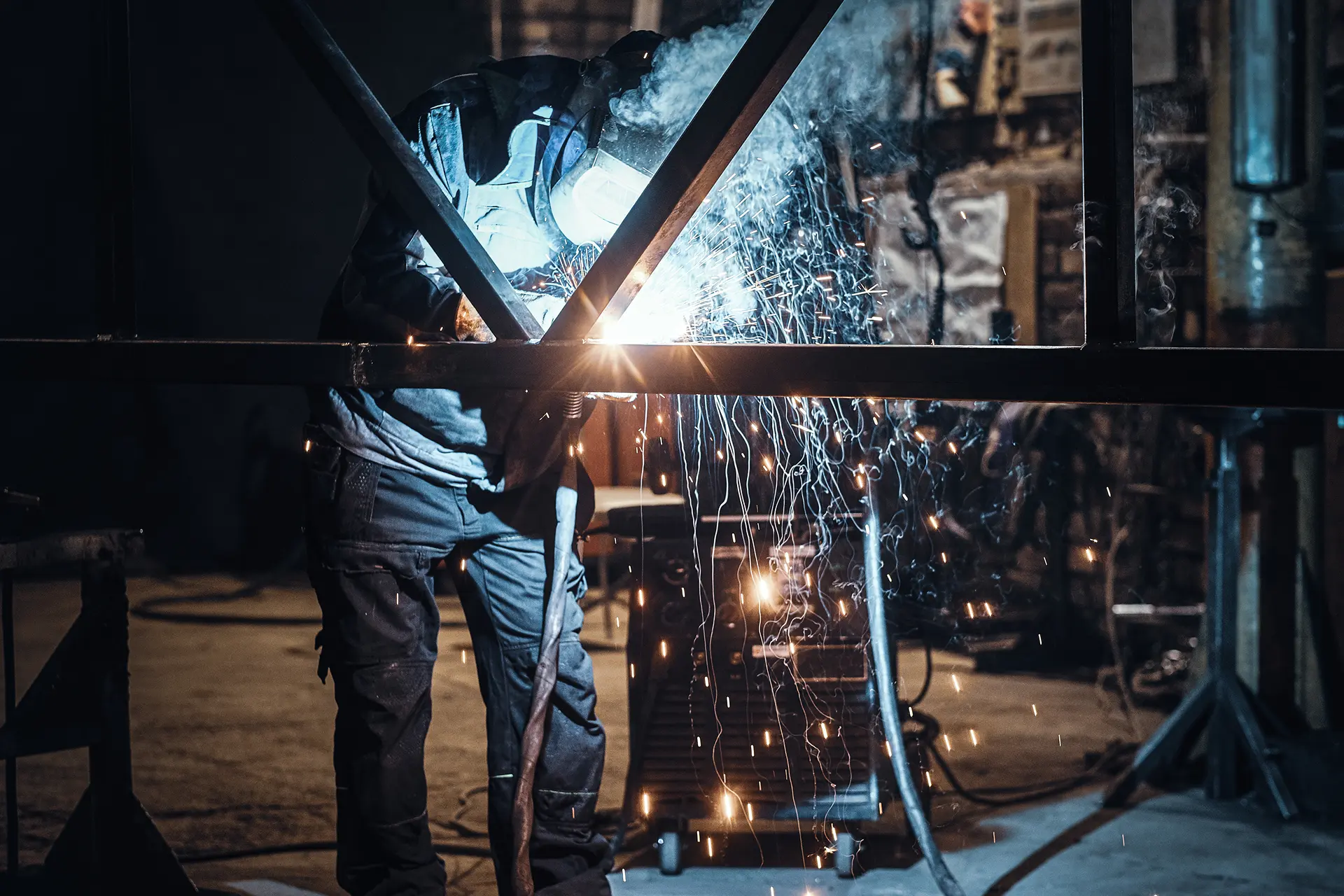
The most useful improvements in a fabrication workshop are usually organizational, not technical. On a recent enclosure job for a food-processing line, the parts were correct but the schedule slipped for a week — not because of cutting or welding, but because the wrong hardware arrived, two panels were made twice, and the fitting crew waited for a kit nobody had assembled. Sorting the kit list and the racking fixed more than any new machine would have. Waste like that is easy to ignore individually and expensive when it repeats every week, which is why the habits below matter more than extra floor space. None of them needs capital approval, and all of them survive a busy month — which is the test most improvement projects fail.
Kitting is the cheapest of those habits. A job should reach the bench as a complete set: cut parts, bought-in items, fasteners, weld consumables and the drawing revision that is actually current. Parts are labelled by assembly, offcuts go back on a rack sorted by thickness and grade, and the next job does not start until the previous one has left the floor. That single rule protects lead times, because a job that is 95 percent complete still holds a slot and still blocks the one behind it. It also makes the cash sit in the right place: in finished work, not in half-built frames waiting for a bolt pack.
Machines need the same discipline as jobs. A press brake that is out of tram, a laser with dirty optics or a welder with a worn liner all produce scrap quietly, and the operator usually absorbs the problem instead of reporting it. Simple planned maintenance — cleaning, calibration checks, filter changes, cable inspections — is cheaper than rework and much cheaper than a mid-shift breakdown. Keeping a short log of machine issues also shows which equipment is genuinely the constraint, so investment goes where it buys the most capacity rather than where the last complaint came from.
The last habit is feedback. Rework numbers, first-time-right rates and on-time delivery are worth tracking even in a notebook, because they show whether a change helped. When a fabrication error is caught, the reason should reach the drawing office and the estimator, not just the person who made it. On the enclosure job, adding a first-off check and a revision stamp on every drawing removed most of the confusion within a month. Predictable schedules come from clean information and a short walk around the floor, not from working harder at the end of the month. A shop that measures the small things stops guessing about the big ones.

From hand tools and layout marks to CNC cutting and digital models — how the trade changed, and what stayed the same.
Scrap sorting, smarter nesting and better coating choices: the practical changes that cut waste in a fabrication shop.
The difference rarely shows in the quote. It shows in the drawing review, the weld prep, the inspection records and the install crew.
Send us your drawings, quantities and delivery date. We will come back with a clear scope, a fixed price and a production slot — no guesswork, no hidden extras.



